Plumber Honolulu Homeowners Can Trust to Meet State Requirements
Finding a plumber Honolulu homeowners can trust is not just a matter of convenience. In Hawaii, plumbing work sits inside a clear regulatory framework, and that framework matters to anyone protecting a home, a rental property, or a commercial space. A good repair can disappear into the background for years. A bad one tends to announce itself at the worst possible moment, often with water damage, permit problems, or expensive rework.
That reality shapes how experienced property owners search for a plumber near me. Price still matters. So does availability. But the deeper question is whether the person doing the work is actually positioned to satisfy Hawaii’s licensing and permitting rules, and whether the job will stand up when inspectors, buyers, or insurance questions enter the picture later.
On Oahu, those details matter more than many people realize. The state regulates who may perform plumbing work. The City and County of Honolulu inspects permitted plumbing and drainage work for code compliance. For larger jobs, and for any work that requires a plumbing permit, homeowners are not simply choosing a service provider. They are choosing whether the work starts on a compliant footing.
Why state requirements should shape your hiring decision
A lot of plumbing calls begin the same way. A leak shows up under a sink. A water heater starts acting up. A drain backs up the night before guests arrive. In those moments, people search fast, compare a few names, and hope for the best. The urgency is understandable, especially when an emergency plumber is needed.
Still, Hawaii’s rules do not disappear because the problem is sudden. The state’s Department of Commerce and Consumer Affairs regulates licensing, and consumers can verify a plumber’s license status, expiration date, and disciplinary history through official license search tools. That is not a small administrative detail. It gives homeowners a way to check whether the person they hire is current and accountable.
The state also makes an important distinction that homeowners should understand. Electrical and plumbing contractors must employ licensed electricians and plumbers to perform the actual electrical or plumbing work. In plain terms, that means the company name on the truck is only part of the story. The actual people doing the work matter too.
For homeowners, this is where trust becomes concrete. Trust is not just friendliness, quick arrival, or a neat invoice. Trust includes proper licensing, lawful staffing, and a willingness to handle work the way Hawaii requires.
The jobs where compliance is not optional
Not every plumbing visit turns into a major project. Some calls are diagnostic. Some are routine maintenance. Some involve repairs that stay relatively contained. But Hawaii gives homeowners a practical threshold to keep in mind. The DCCA advises hiring a licensed contractor for projects over $1,500 in labor and materials, or for any project that needs a building, electrical, or plumbing permit.
That guidance cuts through a lot of confusion. Homeowners often ask whether a job is “big enough” to require a licensed contractor. The better question is whether the total scope and permit status put the work into regulated territory. If they do, guessing is risky.
A few common scenarios tend to raise the stakes quickly:
- work that requires a plumbing permit
- projects where labor and materials exceed $1,500
- plumbing and drainage work subject to inspection
- improvements tied to other permanent systems in the home
- commercial plumbing projects with broader compliance exposure
This is one reason experienced property owners are careful with remodels and upgrades. Permit valuation in Honolulu includes plumbing, heating, air conditioning, and other permanent work when fees are calculated. Even when plumbing is only one piece of a larger project, it remains part of the regulated whole.
What “licensed” really means in practice
Homeowners hear the word licensed so often that it can start to sound like a box-checking exercise. In reality, it is one of the most practical filters you have.
A licensed plumber or licensed plumbing contractor operates within a system that includes verification, renewal, and accountability. The state allows consumers to check license status, expiration dates, and disciplinary history. That gives a homeowner more than reassurance. It gives a documented way to confirm that the professional entering the home is in good standing.
There is another layer that is easy to overlook. Hawaii currently requires licensed plumbers on active status to show proof of continuing competency in the 2021 Uniform Plumbing Code to renew their licenses for the licensing period running from July 1, 2024 through June 30, 2027. For homeowners, that matters because plumbing codes do not stand still. Renewal tied to continuing competency helps reduce the gap between old habits and current standards.
The contractor side of the equation also has a renewal cycle. Contractor licenses renew by September 30 of every even-numbered year. That may sound like a detail only industry people care about, but it is exactly the sort of detail a careful homeowner should notice. Compliance is not static. A company that was properly licensed at one point still needs to remain current.
How a careful homeowner checks a plumber before saying yes
In my experience, homeowners get the best results when they treat verification as part of the hiring process, not as an afterthought after a bad repair. It does not take long, and it can prevent a lot of trouble.
A practical screening process looks like this:
- verify the license status through the state’s official search tools
- check the expiration date, not just whether a license existed at some point
- review any disciplinary history that appears in the official record
- ask who will perform the actual plumbing work
- confirm whether the job will require a permit and inspection
That fourth point deserves more attention than it usually gets. Homeowners often hire a brand, but state rules focus on who performs the work. If the job involves actual plumbing work, the people doing that work need to fit the licensing requirements.
This is especially important when you are comparing bids that seem unusually far apart. A low price can come from efficiency, but it can also come from shortcuts in staffing, permitting, or scope. The invoice does not always reveal that upfront. Questions do.
Why inspections are part of the value, not a nuisance
When people hear permit and inspection, many picture delay, paperwork, and added cost. Sometimes there is extra time involved. That part is real. But for plumbing and drainage work authorized by permit in Honolulu, inspection is how compliance is checked. That is not busywork. It is one of the mechanisms that protects the homeowner.
A properly permitted and inspected job carries a different kind of confidence. It has passed through a process designed to test whether the work meets applicable code. For a homeowner planning to stay in the property, that can reduce the risk of hidden issues becoming visible later. For a homeowner who may sell, refinance, or renovate again, it helps avoid awkward discoveries about undocumented work.
There is a practical trade-off here. Permitted work can move more deliberately than informal repair arrangements. Yet speed without compliance can become the more expensive path, especially if the work later needs correction. The cheapest repair on a Tuesday can become the costliest repair by the time walls are opened, paperwork is reviewed, or water damage spreads.
Water heater repair is a good example of where judgment matters
Water heater repair sounds straightforward until you are standing in front of an aging unit with signs of wear, moisture, or loose connections. The Environmental Protection Agency notes that homeowners should regularly inspect water heaters for leaks, loose connections, corrosion, and other issues. That advice is simple, but it points to a broader truth. Water heaters deserve attention before they fail dramatically.
For a homeowner, the first question is usually whether the issue is a maintenance problem, a repair problem, or something more significant. A small sign of water where there should be none can come from a minor connection issue. It can also be the first visible clue of a bigger problem. That is where a qualified plumber earns the call-out fee, by distinguishing between a manageable repair and a situation where the homeowner should prepare for a larger decision.
If the work expands into something that triggers permit requirements, the compliance side comes into play immediately. That is another reason not to choose solely on who can arrive fastest. The right emergency plumber on Oahu should be able to stabilize the issue and also explain what the next compliant step looks like.
Leak detection is not just about the obvious drip
Leak detection has become more important as homeowners pay closer attention to water waste and property damage. The EPA notes that leak-detection and flow-monitoring devices can help consumers reduce water waste. That does not mean every home needs the latest gadget. It does mean that hidden leaks deserve more respect than they often get.
The classic plumbing panic is the burst line or the puddle spreading across a floor. Hidden leaks are quieter and, in some cases, more expensive over time. A homeowner may notice a persistent musty smell, a subtle stain, or unexplained water use. That sort of situation calls for patience and method, not guesswork.
A capable plumber Honolulu residents trust will usually resist making absolute promises before the diagnosis is clear. That restraint is a good sign. Leak detection can be simple, or it can involve tracing a problem through layers of finished space and plumbing runs that are not immediately visible. What matters is not flashy language. What matters is disciplined troubleshooting and a willingness to explain what is known, what is still uncertain, and what the homeowner is authorizing next.
Drain cleaning and sewer line repair call for realism
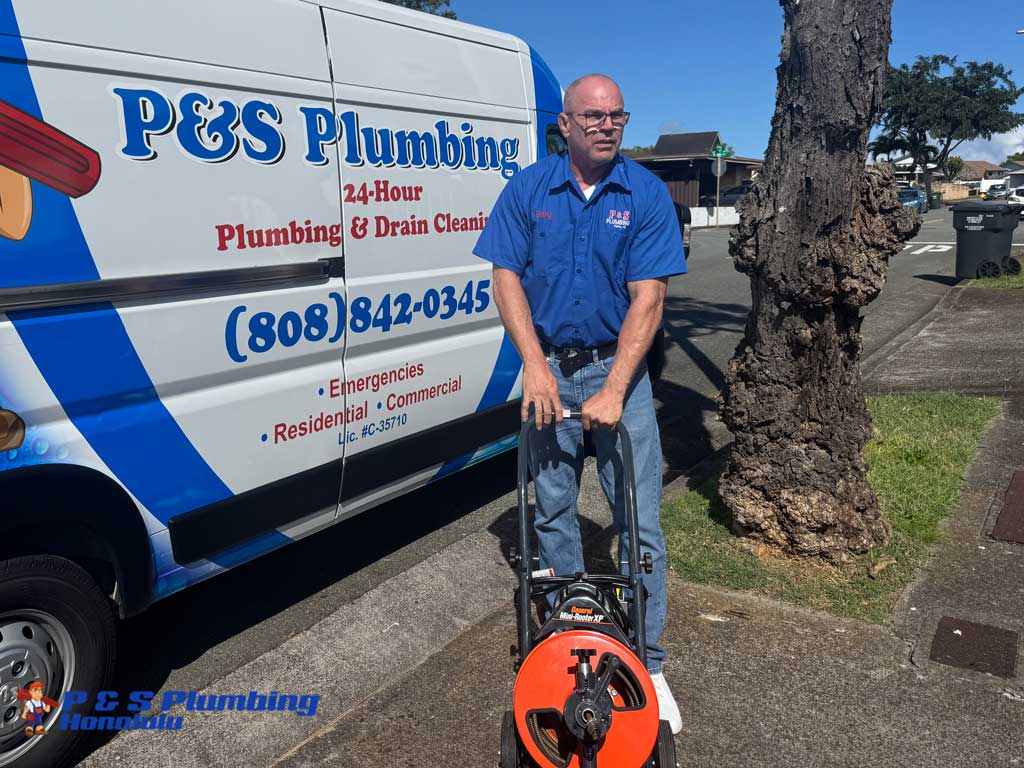
Drain cleaning is one of the most frequently requested plumbing services, and it is also one of the easiest services for homeowners to underestimate. A slow kitchen line and a recurring backup may look similar from the outside, but they are not the same problem. One may be resolved relatively quickly. The other may point to a larger issue that needs a more careful response.
The same goes for sewer line repair. Once the word sewer enters the conversation, stress levels rise fast, and understandably so. But this is exactly when measured communication matters. A reputable plumber Oahu homeowners hire should be clear about whether the issue appears isolated, recurrent, or likely connected to a deeper line problem. If the work moves into permitted territory, the homeowner should hear that plainly, not as an afterthought.

There is no benefit in pretending every backup is catastrophic. There is also no wisdom in minimizing repeated warning signs. The best service professionals tend to be balanced. They do not dramatize. They do not shrug off patterns that suggest a larger repair path.
Emergency calls reveal a company’s standards
Almost any company can sound polished during a scheduled estimate. Emergency conditions are different. An emergency plumber is tested not just on speed, but on decision-making under pressure.
Homeowners should pay attention to how a plumbing company behaves when conditions are messy. Do they focus first on stabilizing the situation? Do they explain the immediate risk in plain language? Do they separate temporary measures from permanent repairs? Do they speak clearly about whether permits or follow-up inspections will be needed if the scope grows?
That matters because emergency work can blur lines. A quick fix may be appropriate to stop active damage. But a temporary repair should be described as temporary. Trust grows when a plumber says, in effect, “Here is what we can safely do tonight, and here is what needs to happen next to bring this into full compliance.” That is the voice of experience.
Commercial plumbing adds another layer of responsibility
A commercial plumber works under pressures that differ from a single-family home call. The https://erickzhel239.terracolumn.com/posts/sewer-line-repair-understanding-permit-and-inspection-rules-in-honolulu property may serve employees, tenants, customers, or all three. Downtime can affect operations. Water issues can disrupt health, safety, and access. At the same time, the same basic compliance themes remain: proper licensing, qualified personnel performing the work, and attention to permit and inspection requirements where applicable.
For business owners and property managers, this means the hiring standard should be even tighter, not looser. A commercial plumbing issue handled poorly can ripple outward into lease concerns, scheduling conflicts, and repeated service disruptions. The right professional is not just someone with tools. It is someone who understands that plumbing work sits inside a larger compliance and operational picture.
Why “plumber near me” should not be the final filter
Search behavior is practical. People type plumber near me because they want someone local, reachable, and available. There is nothing wrong with that. Proximity matters, especially on Oahu where response time can shape how much damage a leak causes.
Still, location should narrow the field, not end the evaluation. A nearby provider who ignores state requirements is not a safer choice because the truck arrived quickly. A plumber Honolulu homeowners can trust is local and compliant, responsive and properly credentialed.
When homeowners combine both filters, geography and verification, they usually make better decisions. They find service providers who can show up when needed and stand behind work that fits state and county expectations.
The homeowner’s advantage is simple diligence
The good news for homeowners is that Hawaii’s framework gives you tools. You are not stuck relying on guesswork, sales language, or online ratings alone. You can verify license status. You can review expiration and disciplinary history. You can ask whether the actual workers are licensed for the plumbing work being done. You can clarify whether a permit is required. You can understand that permitted plumbing and drainage work in Honolulu is subject to inspection for compliance.
Those are not technicalities. They are leverage.
A homeowner does not need to become a plumbing expert to make a sound hiring decision. You only need to recognize that trustworthy plumbing service in Honolulu is not measured by one factor. It is a combination of responsiveness, workmanship, transparency, and compliance with the rules that govern the trade.
That is true whether the call is for water heater repair, drain cleaning, leak detection, sewer line repair, or a larger commercial plumber assignment. The most dependable choice is the one that holds up before the work starts, during the repair, and long after the invoice is paid.
When plumbing problems hit, urgency is real. So is the temptation to skip the extra step of checking credentials or asking about permits. But those few minutes of diligence can protect a home, a budget, and a lot of future stress. On Oahu, that is often the difference between simply hiring a plumber and hiring one you can genuinely trust to meet state requirements.